
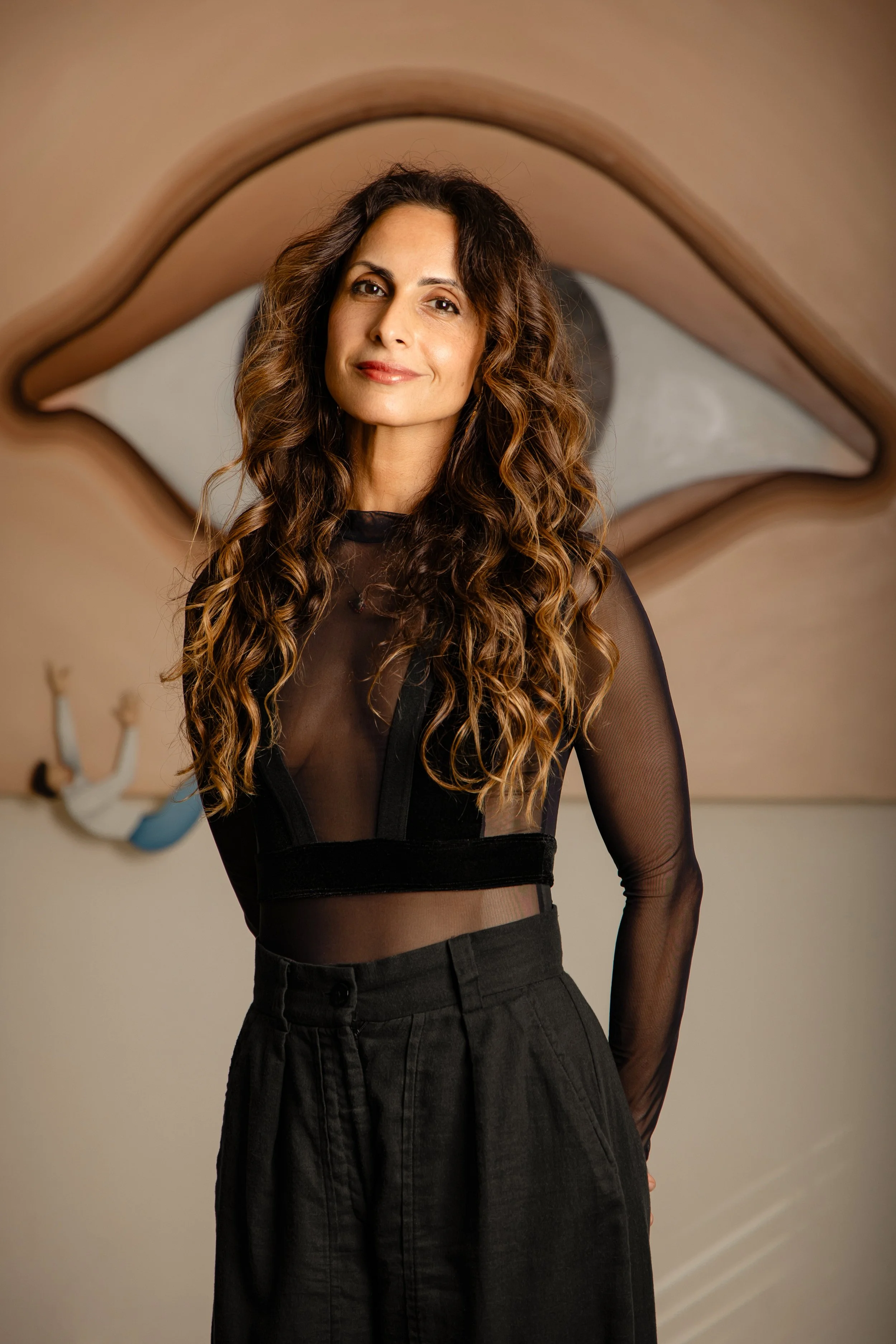
Sarrah Zadeh is a multidisciplinary conceptual artist whose work investigates how perception shapes our emotional experience and the ways we relate to one another.
Working primarily through sculptural form, Zadeh gives physical presence to experiences that are often intangible. Material, form, and movement are determined by the idea, allowing each work to develop its own physical language.
Her current work extends this inquiry through What Survives Translation, a new series rooted in Persian idiomatic language, investigating how language shapes perception and whether the emotional reality created through spoken language can survive translation into visual form.
Zadeh’s work has been exhibited at Lawndale Art Center and The Health Museum, among other venues. She has been featured in Arts to Hearts Magazine and is a featured artist in the upcoming documentary Living Art.
Originally from Iran, Zadeh lives and works in Houston, Texas. She holds a BA in Art History from the University of Houston.
Artist Statement:
My work begins with a question, but it does not move toward resolution. I am interested in the distance between what happens and how we experience what happens—the space in which perception becomes our reality.
We rarely encounter an experience without bringing something of ourselves to it. Memory, expectation, language, relationships, and emotion alter what we see and what we understand. I am drawn to these shifts, particularly the moments when something intangible changes the meaning of what appears to be physically present.
I approach each work as a constructed condition rather than an explanation. The idea determines its material and form, and I reduce the work until what remains is essential to the experience. I am not interested in resolving meaning for the viewer. I want the work to remain open enough for recognition to occur through the viewer’s own perception.
My recent work has led me toward language as another structure through which reality is formed. I am interested in what happens when meaning moves beyond words and whether an emotional experience can remain intact as it passes into visual and physical form.
The work does not provide answers. It holds a condition in place long enough for the viewer to encounter what is already there—and perhaps recognize how much of what they see has arrived with them.